
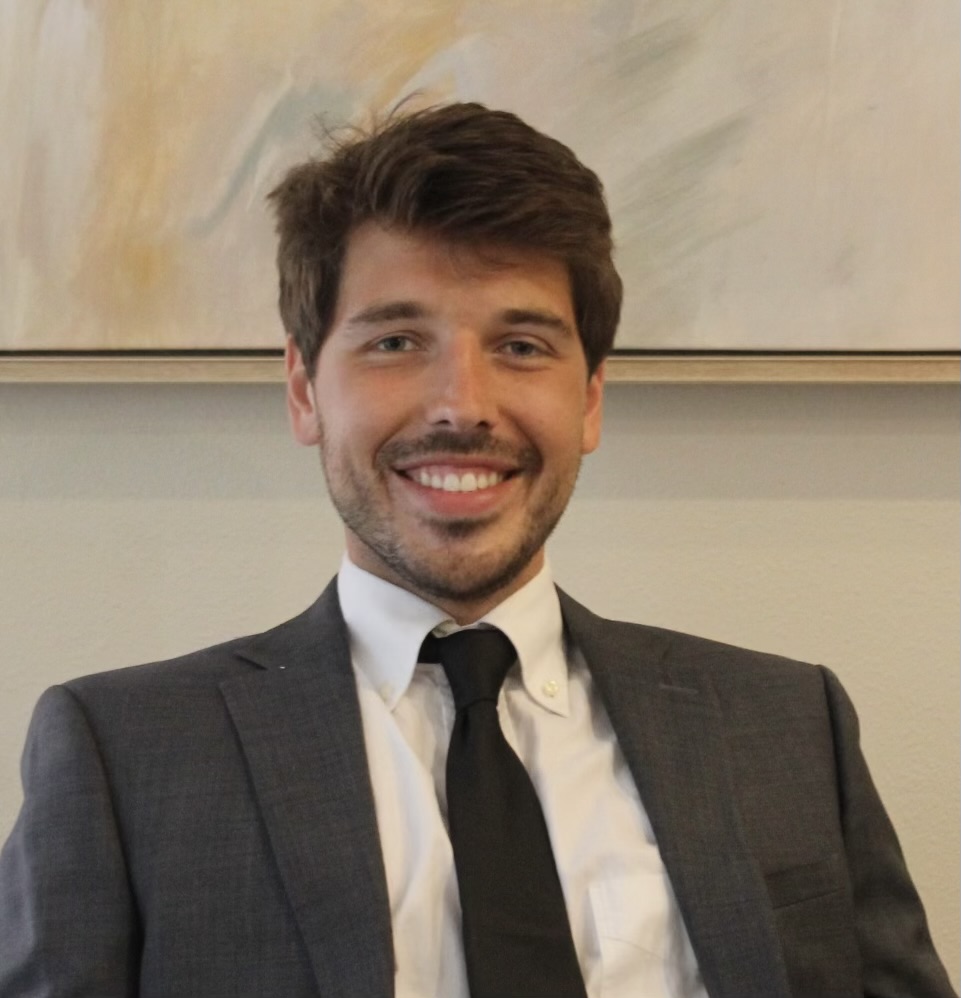
About Leonardo Pires Seib Corso, MBA, BSIE, CSM, SSGB
Originally from Porto Alegre, Brazil, I moved to the United States in 2016 to pursue my undergraduate studies at the Indiana Institute of Technology. Now based in Tampa, Florida, I am a dynamic operations leader focused on bridging the gap between technical engineering principles and strategic healthcare innovation.
Professional Profile
I currently serve as an Operations Manager at BeniComp Health Solutions, where I oversee critical organizational functions and drive large-scale operational excellence. My career is built on a unique academic foundation, holding a Bachelor of Science in Industrial and Manufacturing Engineering and an MBA in Project Management, and I am currently completing a Master of Public Health (MPH) at the University of Florida.
High-Level Responsibilities & Expertise
Throughout my tenure in the healthtech and insurance space, I have held senior-level responsibilities including:
- Strategic Operations Leadership: I direct cross-functional teams to optimize internal workflows, enhance service delivery, and achieve operational excellence.
- Product Development & Innovation: I have spearheaded the end-to-end architecture and launch of new insurance products, including proprietary ACA compliance solutions and Reference-Based Pricing (RBP) models.
- Mergers & Acquisitions (M&A): I lead operational due diligence and create comprehensive post-merger integration (PMI) roadmaps for TPA acquisitions, identifying synergies and margin expansion opportunities.
- AI & Digital Transformation: I architect the adoption of cutting-edge AI technologies, such as Google Gemini and NotebookLM, to automate complex manual processes ranging from claims adjudication to regulatory compliance validation.
- Compliance & Accreditation: I manage rigorous application lifecycles and policy drafting to ensure alignment with national standards, such as URAC and NCQA.
- Financial & Resource Management: I oversee large-scale premium and claims invoicing operations while performing complex budgetary forecasting and ROI analysis for departmental growth.
Recognition & Engagement
I maintain an active presence in the healthcare industry through my affiliations with several leading organizations, including the American College of Healthcare Executives (ACHE), the Healthcare Information and Management Systems Society (HIMSS), and the National Association of Health Services Executives (NAHSE). Additionally, I am fluent in English, Portuguese, and Spanish, enabling me to collaborate effectively with a diverse range of global and domestic stakeholders.
About BeniComp Health Solutions
BeniComp Health Solutions is a Third Party Administration (TPA) that has been operating for over 60 years. Founded in 1962 and spanning three generations of leadership, it has evolved from a traditional insurance agency into a national leader in preventive health and insurance technology.
Key Company Highlights
- National Reach: BeniComp is licensed in all 50 states, allowing us to serve diverse employer groups across the country.
- Innovation-Focused: Now headquartered in Tampa, Florida, we focus on “healthtech” solutions. We prioritize preventive health and data-driven technology to shift the healthcare model from reactive treatment to proactive prevention.
- Mission: Our core goal is to reduce chronic disease and healthcare spending by empowering people with data, prevention tools, and modern technology.
Core Products
BeniComp’s product suite is designed to align the interests of employers and employees through financial incentives and health management:
- IncentiCare: A flagship health insurance solution for self-funded employers. It uses a patent-pending model where employees can lower their deductibles by meeting specific health biomarkers related to chronic disease (like blood pressure or cholesterol levels).
- BeniComp Select: A premier executive medical reimbursement plan. It allows companies to offer key employees tax-advantaged reimbursement for out-of-pocket expenses not covered by their primary health plan (including dental, vision, and hearing).
- Preventive Health Management: A clinical offering that includes health screenings, blood analysis, and one-on-one health coaching to help participants identify and reverse chronic health risks.
Medical Travel & Digital Health News (MTDHN): Please tell our readers about yourself.
Leonardo Corso (LC): My full name is Leonardo Pires Seib Corso. I’m originally from Brazil, the southernmost part called Porto Alegre. It is the capital city of Rio Grande do Sul in southern Brazil, known as a major cultural, political and economic hub with a population of approximately 1.48 million people.
I would like to point out that in Brazil, it’s not that common to have three last names like I do. My parents made that decision: the first one is mom’s dad from Portugal. And then the middle one, Seib is from my dad’s mom from Germany. And then the very last one, Corso, that’s my dad’s dad from Italy.
In Brazil, we’re from a part of the country where we were colonized from all kinds of countries from Europe. We have all of that history behind us.
MTDHN: When did you come to the United States? Can you tell us a little bit of your story?
LC: I was actually an exchange student in high school here in Tampa, FL back in 2014.
I have relatives that live in town and I really wanted to enroll in a program to improve my English and vocabulary and get the experience of living in a different country and learning from a new culture.
I also wanted to attend college in the US from both an educational and sports perspective. During my first year here, I stayed with a family for six months and attended a private school here in downtown Tampa.
I earned great grades in school and did really well playing soccer. The father of one of the guys that played with me filmed all the games. So when I went back home, we used those videos to send to some coaches here in America that were looking for players.
That’s how I ended up getting recruited. The fun part of the story dates back to the end of my initial six months in high school. Around the beginning of December when you have the winter break and enjoy the holidays, I saw my soccer coach, who was also a history teacher.
We crossed paths in the hallway and he said, “Can I send you some fitness programs for you to do when you’re back in Brazil? So when you come back, we’re good because playoffs start in January.”
I responded, “Oh, I don’t think you remember coach. I’m done after six months. That’s what my family could afford so I’m not coming back.”
“What do you mean? It’s playoffs,” he retorted.
In the time between the end of class through the first week of January — right before I went back home in a plane – my coach along with the parents of my other teammates contacted my family and all funded for me to play a second semester.
Essentially, they were all paying for the tuition. Unfortunately, when we filed for the department of high school athletics, they rejected my participation and said that my group of friends could not pay for a player who wanted to stay in this country.
I ended up going back home but applied to a few universities and got a full scholarship at the Indiana Institute of Technology where I pursued a bachelor’s degree in industrial manufacturing engineering and played soccer there all four years.
I stayed on an extra year, earned an MBA and had different experiences with companies, mostly on the manufacturing side. When COVID hit, I reached out to Steve Presser, President of BeniComp, a leader in health technology and employer health insurance.
MTDHN: You started working there immediately?
LC: Yes.Steve and I started working remotely from home for BeniComp during COVID.
This was the perfect time because we were launching our product called BeniComp IncentiCare. It’s a proactive, self-funded health management product that reduces high-cost claims by analyzing employee health data (blood work) and providing targeted, preventative care. It focuses on lowering deductibles by engaging participants in health screenings to prevent chronic diseases and manage health risks before they become costly.
Members can lower their deductible based upon health screenings and health results. Individuals have the incentive to stay healthy and lower their financial costs related to healthcare.
I started as an intern with BeniComp and have been growing my role in the company ever since. Right now, I oversee operations and I’m part of the leadership team. I also started pursuing a master’s degree in public health at the University of Florida and joined a few organizations related to healthcare here in Western Florida.
It’s been a great pride. A lot of learning, a lot of teachings.
MTDHN: What do you like most about the way the company is progressing?
LC: As you can imagine, it’s highly unusual for someone with a background in industrial engineering to move into healthcare and health insurance.
While this is one of the costliest industries for the federal government, it is the one that generates the highest annual revenues in the U.S.
There are thousands of companies trying to solve the issues we see. It’s not an easy thing to solve — it’s a very complex and systemic situation.
When I look at BeniComp, I think we have a very innovative product that is unique to us and no other companies in the country can offer it. I see a lot of growth opportunities that have a huge, positive impact on the lives of millions of Americans.
We’re sitting in the early stages. Being a part of an awesome team that is building everything and setting things up, especially with all the AI and technology coming, is really exciting.
Doing something that you’re passionate about and doing it with great people is really awesome. From my perspective, what I really enjoy is the organizational aspects of the work and the people I come in contact with outside of the company.
They’re not only payers, but primarily providers, hospital executives and administrators, physicians and clinicians. Getting their perspectives is really interesting because a lot of times you see payers putting the blame on providers and vice versa with members just in the middle of all of this.
I learn a lot from just having these relationships and getting a complete picture.
MTDHN: What do you think is the formula or the solutions that you have that are most compelling to the payers?
LC: One of the primary reasons for my success is applying my background to help BeniComp grow.
I’m very process-oriented and have training in engineering, particularly the technical side. This enables me to see how all connections between patients, providers and payers happen in the industry.
It just clicks for me to observe certain things and see how to implement applicable solutions that can positively impact how these parties can work together. We’ve been trying to make our processes seamless and improve the delivery of care for patients.
This is not easy to accomplish, especially when you’re trying to cut costs and relieve the financial burdens on these employer groups. There’s a ton of companies and payers in the industry that are coming up with very creative ways of cutting costs, but at the end of the day, patients get thrown into challenging situations that pose barriers to accessing care.
I think we’re able to identify and implement solutions that create savings to health plans and employer groups, and concurrently, make sure that members are getting easier access to treatment.
MTDHN: What are the key differentiators for BeniComp?
LC: We have unique solutions that focus on health screenings.
Because there’s such a huge monetary incentive for members, we get a ton of participation during the health screenings. On average, from the employees that enroll in the health plan, we get about 96% participation.
Suddenly you have a full picture of the entire population. You see how that entire group looks as a whole in that geographic area or location. We also have a clinical team at BeniComp that does the prior authorizations, utilization management and retrospective review as well.
Additionally, we’re also the claims payer and see the claims coming in, which procedures are performed as well as the diagnosis. You suddenly have three things that can tell a whole picture of that population, and you don’t see that really across any other payer solution in the nation.
Providers might have the blood data and if they exchange enough data with other providers, there might be access to other procedure codes and diagnosis. But that’s about it.
When you look into labs, they have the blood data, but they don’t have the procedure codes and the demographics.
From my perspective, we have all this data and information together. We expect to do more with predictive analytics on what impacts these outcomes along with demographics and patient situations.
MTDHN: What is your point of entry? Is it with the employer, the TPA, the broker? What does your client base look like?
LC: Initially, when we first launched, it was very much with brokers.
We would create relationships with specific brokers and try staying with brokers that had an innovative mind, were creative and didn’t just want to stick to the big carriers and to premium ways of being paid. We sought out brokers that were creative about trying to be transparent, trying to do innovative things for the members and for the group.
Initially, those were the relationships we would get. We’d go to a broker and then get access to their clients. While we continue down this path, we have added more program managers — a company that manages a full program. They have specific vendors in place for different things, such as cost containment or access solutions, and then they choose us to be the TPA to administer those plans.
MTDHN: Where do you go to meet the brokers? How do you target that market?
LC: We have two vice presidents of strategic growth and sales. One is located here in Tampa, which is just down the hall from me, and the other one is on the West Coast.
They both have connections and relationships from past experiences and attend main industry conferences. A lot of business comes from referrals or word of mouth. One broker passes along our name to others and our contacts expand from there.
MTDHN: How do you view all of the new regulations that are coming down on PBMs, transparency, compliance and rebates — and all of the new market expectations?
LC: That’s an interesting question and I was just talking to our CEO about it.
Breaking it down in two ways: Just a few days ago, we had TrumpRx go live with about 40 drugs currently. They’re being offered at a huge saving because of that Most Favored Nation benchmark.
We were discussing how we can take advantage of that and how we can make it a seamless experience for members. At the same time, we want to make sure that we are creating savings for the employer group.
We are also wondering what stop loss might look like for the employer groups who are also pushing this opportunity. Our discussions with stop loss vendors pose some questions, including, “If we’re trying to offer this, are you going to be partners with us? What do you think about this? How can we do this together?”
We’re trying to look at it from a legal perspective where we can offer the opportunity and be compliant. We also need to factor in the entire situation with the Consolidated Appropriations Act, the rebates and everything that is taking place.
Rebates have been one of those main ‘forever’ issues in the industry, especially the push for transparency. Members are the ones who pay for most of these drugs, considering the high-deductible plans and the rebates then going back to the plan — which make no sense. In addition to that, there are the middlemen taking cuts all along the way.
The new regulations seem to reflect a thoughtful approach and very good perspectives that should result in better outcomes. We’ll see how it actually gets rolled out.
Another issue is the No Surprises Act (NSA). I was just explaining NSA with some of our new hires and asked each one of them, “What do you think about it? Do you think this is great for members? You’re shielding people from surprise bills and now there’s protection.”
Their response was interesting: “Yes — it was passed on with good intent, but the way that was written actually was not good for everyone because providers win 86% off of the dispute resolutions.”
At the time it’s happening, it looks like it’s good, but everyone gets impacted the following year with additional costs. The same holds true from a high level with rebates. Regulations that have been passed so far look good. How it’s actually written into law and executed, we’ll see.
MTDHN: Do you select the vendors that you’re working with? What are your requirements?
LC: When we first started BeniCompabout six years ago, the first set of vendors we started working with met the needs for our standard plans. If a client came to us, we would offer those first.
From that point, we’ve added tons of vendors which certain clients requested. We ended up adding a lot of PBMs, networks, RBP vendors, telemedicine, mental health — all that you can imagine.
In the past three years we’ve gathered enough data and experience with each one of them. We’ve been cutting some out since there are specific areas that are important for us now and require more focus.
I would say we have passed the point of adding new vendors and now we have a very selective group of vendors. The ones that we work with are transparent, share our vision and mission and bring in either great experience for members or great savings to our groups.
MTDHN: How do you address the specialty pharmacy or gene and cell therapy spend?
LC: I don’t know if I have an answer for you on that.
For specialty drugs, I think the PBMs we’re working with right now have in-house solutions. We are still plugged into international sourcing of drugs. The market is changing for gene and cell therapy so it’s something that might be happening in the future.
We’ve observed new technologies, treatments and procedures and have been working closely with Stop Loss companies. Some of our Stop Loss vendors are still not underwriting and trying to get more data on how to even underwrite exposure because of the huge cost. These therapies are crazy expensive. The results are amazing, but for some groups, especially depending upon how small they are, the premiums for Stop Loss are not affordable.
MTDHN: Since this is a medical travel publication, how would you compare your experience in healthcare in the United States vs. Brazil?
LC: Brazil has both a public system and a private market.
Growing up, my family always had private insurance, provided by Unimed, the world’s largest medical work cooperative and Brazil’s leading health insurance provider, serving over 20 million beneficiaries. It operates a massive network across roughly 75-84% of Brazil, featuring 116,000+ cooperative doctors, 2,400+ accredited hospitals, and 119+ owned hospitals.
The public system, just like in many other countries that offer public systems, is for emergency situations or accidents. It’s great to get that level of care and it’s there for everyone. People that can’t afford private insurance have access to this coverage.
But if you’re trying to do pre-scheduled visits to specialists for complex surgeries you have a long waiting period. And in a lot of areas of the country, just like it is in some places in the United States such as rural areas, you have no access.
My family lives in a big city and we’ve always had private insurance – and we took advantage of that. But when COVID hit in Brazil, for example, the public system was the one who held everything together. They were getting access to a lot of the vaccines and were able to distribute these to the public.
The public system is for the people that need it and it works well for them. I know the costs in Brazil for private insurance have been growing because my parents actually still report to me. My mom actually had me on the private insurance until like a year and a half ago because she shared, “Oh, we never know if you are going to come back or not.” So, I’ve been paying but finally told my Mom to drop it. I’m staying in the U.S.
But when you compare the United States to other countries, you still see that huge difference in healthcare costs. When you look into the metrics of delivery and quality, the United States is pretty level to the other countries, begging the question of what justifies the cost? That is still a question and something to be addressed.
One of my future goals is to perhaps hold a position in the U.S. or Brazil that impacts public health. I would prefer it to be in the U.S. if possible, but it’s a passion of mine.