
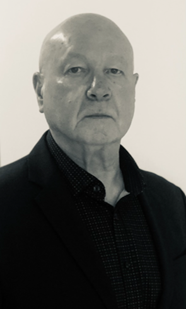
About Neil F. Gordon
M.D., Ph.D., M.P.H., F.A.C.C.
CEO and Medical Director, INTERVENT International, LLC.
Dr. Gordon obtained his M.D. and a Ph.D. in exercise physiology in Johannesburg, South Africa. He relocated to the United States in 1987 and obtained a master’s degree in public health from the University of California, Los Angeles. He is a fellow of the American College of Cardiology and is board certified in public health and general preventive medicine. Dr. Gordon served as director of exercise physiology at the world-renowned Cooper Institute in Dallas, Texas for six and a half years where he worked with numerous elite athletes. In 1995, Dr. Gordon relocated to Savannah, Georgia, where he founded INTERVENT USA. In his capacity as INTERVENT USA’s Chairman and CEO, Dr. Gordon successfully led the company’s national and international expansion which culminated in its acquisition by Nationwide Better Health (a subsidiary of Nationwide, one of the world’s largest insurance and financial services companies) in 2007.
After the acquisition, Dr. Gordon served as the chief medical and science officer for Nationwide Better Health until 2011 when he led the initiative which resulted in INTERVENT re-acquiring global rights to the INTERVENT programs. INTERVENT’s credible, trusted, proven chronic disease prevention and management programs have been used to serve over two million individuals.
Other key past positions include:
- Clinical professor of medicine at the Emory University School of Medicine (Atlanta, Georgia)
- Visiting Professor, Centre for Exercise Science and Sports Medicine, School of Therapeutic Sciences, University of the Witwatersrand (Johannesburg, South Africa)
- Vice-president of the American Association for Cardiovascular and Pulmonary Rehabilitation
- Trustee of the American College of Sports Medicine
- Chairman of the American Heart Association Committee on Exercise, Cardiac Rehabilitation and Prevention
Dr. Gordon has authored over 130 published scientific manuscripts, eight books and numerous scientific abstracts in the area of preventive medicine.
About INTERVENT International, LLC
US-based INTERVENT International is a physician-led, global, behavior change and population health management company that provides its credible, trusted and proven services primarily via digital and telehealth approaches. INTERVENT develops, licenses and provides evidence-based, technology-enabled, data-driven programs for the prevention and management of multiple chronic diseases and cost-drivers. INTERVENT’s programs have been proven effective for widely diverse groups of individuals in more than 120 published scientific abstracts and manuscripts, including randomized and independently-conducted clinical trials published in prestigious, peer-reviewed scientific journals. More than two million individuals have participated in INTERVENT’s programs, including patients from over 150 medical centers as part of landmark multi-center chronic disease prevention/management-related clinical trials funded by the National Institutes of Health and others.
For more information, please visit www.interventhealth.com or email info@myintervent.com.
Medical Travel and Digital Health News (MTDHN): Please tell us about yourself and how you got involved in your line of work.
Neil Gordon (NG): I currently serve as the CEO of INTERVENT International and as one of our company’s medical directors. I’m a board-certified physician and a fellow of the American College of Cardiology. In addition to my medical degree, I have a Ph.D. in exercise physiology and master’s degree in public health.
I grew up in Johannesburg, South Africa. In South Africa, rugby is a very popular sport when you’re in high school. Unfortunately, during one match, when I was 14 years old, I broke my wrist and was unable to play for a while. So, I looked for another sport and discovered competitive middle-distance running. Through running, I became interested first in sports medicine and then in exercise physiology. One thing led to another, and I specifically went to medical school because of my interest in exercise and lifestyle and how that could be of benefit from a health perspective.
At medical school, I first thought I would become an orthopedic surgeon. In those days in South Africa, when you finished medical school, you had to serve a medical internship and then go into the army for two years. During my medical internship, I obtained a second-degree karate black belt, which was the culmination of years of training that served to further reinforce my passion for sports medicine.
Following basic military training, I tried to get a position in orthopedic surgery at the military hospital. There weren’t any existing opportunities, but the head of cardiology knew me from sports medicine meetings and gave me the opportunity to help start a cardiac rehabilitation program for the hospital.
I agreed, although I knew nothing about cardiac rehabilitation. I bought a book about cardiac rehab on a Friday, read it over the weekend and on the Monday, I helped start what became South Africa’s first comprehensive cardiac rehabilitation program. That’s how I got interested in preventive cardiology and, especially, the powerful role that lifestyle plays in shaping cardiovascular health.
MTDHN: How did your career progress?
NG: In the 1980s, The Heart Foundation of Southern Africa (at that time, South Africa’s equivalent to the U.S.’s American Heart Association) had specific annual themes. In 1985, the theme was physical activity and I was asked to be the national scientific advisor. They invited the world-renowned Dr. Ken Cooper from the United States to present and participate. He’s the physician who invented the word ‘aerobics’ and we got to speak at a couple of places together. We developed a great rapport and I ended up moving from South Africa to Dallas, Texas, in 1987 to work at the Cooper Clinic and Research Institute. While serving as the director of exercise physiology at the Institute, amongst other activities, I evaluated and assisted many elite athletes. For example, I was the first physician to measure cyclist Lance Armstrong’s maximal oxygen uptake when he was 16 years old and tell him that he had the genetic potential to be the world’s greatest endurance athlete. I also helped tennis great, Jimmy Connors, with his exercise and nutrition program and we co-authored a book called “Don’t Count Yourself Out: Staying Fit After 35.”
So that’s how it all started. I subsequently spent the early part of my career in the U.S. running preventive cardiology programs before founding our legacy company, INTERVENT USA, in 1997. This followed a collaborative initiative with a group at Stanford University.
INTERVENT USA was sold to Nationwide, one of the world’s largest insurance and financial services companies in 2007. When Nationwide later exited the healthcare space, we reacquired our intellectual property and resumed service under the name, INTERVENT International, with an intentional initial focus on research and technology product development
Over the years, I’ve had the privilege of not only working with many athletes and patients, but numerous employers, health insurers, medical centers and more. I’ve also maintained a strong interest in research and have personally published over 130 full-length scientific manuscripts. I have also authored eight books on the topic of lifestyle and chronic disease prevention and management.
NG: As a starting point, here’sa little bit of background information about our company.
INTERVENT is a global, physician-led and technology-driven behavior change and population health management company. Essentially, what we do is develop, test and provide, both directly and via SaaS (software as a service) agreements, proven programs for the prevention, reversal and management of multiple chronic diseases and healthcare-related cost drivers.
These are the ones that everyone’s very familiar with: heart disease, stroke, diabetes, cancer — and even obesity, which we consider to be a chronic relapsing condition. Our high-tech, high-touch, AI-powered solutions include a focus on digital and telehealth coaching that integrates comprehensive lifestyle changes with remote patient monitoring and other important aspects of evidence-based care. They all aim to empower individuals to better prevent, reverse, manage and/or live successfully with chronic conditions.
To date, our credible, trusted, proven programs have been used to serve over two million individuals.
A key to our company’s success has been having a talented leadership team with extensive experience in the fields of medicine, science, education, business and technology, including these professionals who have been with us since our inception: Dr. Richard Salmon (COO), Chip Faircloth (Executive VP), Brenda Wright (VP – Behavioral Science), Kevin Reid (Director – IT), Prabakar Ponnusamy (CTO) and Dr. Saul Quint (CEO – INTERVENT Canada).
MTDHN: How do these solutions impact healthcare stakeholders?
NG: Our solutions have important implications for multiple stakeholders, especially self-insured employers, payers, insurers, healthcare systems, providers and others at financial risk for the health of large populations.
When we work with employers, the value proposition is that we help them protect their most valuable asset, namely, the health, productivity and wellbeing of their employees.
We do this by using what we believe is the most sensible approach – a high-tech, high-touch approach that focuses on keeping healthy people healthy and reducing risk in those at heightened risk for chronic diseases. This helps reduce potentially avoidable healthcare costs, optimize wellbeing and productivity and minimize disability.
MTDHN: What are the interventions you offer?
NG: Our interventions span the spectrum.
At one end of the spectrum are health risk assessments and at the other end is one-on-one digital and telehealth coaching.
Typically, when we work with an employer, the first step is to provide our online health risk assessment, which helps the client to better understand the magnitude of the chronic disease problem in their organization and how it impacts health and productivity.
The next step is to manage the issues that have been identified. To do that, we offer a suite of interventions:
- Purely digital coaching, where a person does everything online through an online platform and/or app. They don’t have to interact with a live person.
- Live professional telehealth coaching, conducted one-on-one or in a group format.
We also have hybrid approaches to provide these services.
MTDHN: Can you provide more details about the interventions?
NG: Our lifestyle management and chronic condition management programs have been successfully used and proven effective as part of large multicenter clinical trials.
Most recently, our telehealth coaching services have been used as part of four large multicenter clinical trials focusing on chronic disease risk reduction. They are very large clinical trials, involving service by us to patients from over 150 medical centers (mainly in the U.S. and Canada), and with total study funding of over $100 million from the National Institutes of Health, the Patient-Centered Outcomes Research Institute (PCORI) and others. Within these studies, we play an integral part by providing the telehealth lifestyle and chronic care management coaching services to all clinical trial participants.
These studies involve patients with multiple chronic conditions, such as stroke, heart disease, high blood pressure, prediabetes and/or diabetes.
From a diabetes perspective, the services we provide are comprehensive in nature. Our diabetes self-management education and support services component focuses on helping the individual understand diabetes, why and how to monitor their blood glucose, when to test it, how to interpret and act on the results, how to properly use medications, etc.
But our approach goes way beyond glucose control. We focus on comprehensive cardiometabolic risk reduction, especially recognizing that people with diabetes are at significantly higher risk for cardiovascular disease. This means helping patients manage blood pressure, cholesterol and triglycerides, and other cardiovascular disease risk factors alongside glucose levels.
Those are all achieved through a combination of comprehensive lifestyle changes and the appropriate use of medications. Like most chronic diseases, lifestyle intervention is the foundation of diabetes prevention, reversal and management. Therefore, we place substantial emphasis on helping people make and adhere to meaningful lifestyle changes, such as regular exercise and physical activity, healthy eating, weight management, stress management/mental health, proper sleep habits and tobacco cessation.
When we work with employers, we offer the service of actually providing and fulfilling the blood glucose monitoring devices as well as the testing supplies. So, an employer can pick certain services, depending on what they’re looking for or opt for our comprehensive offering.
MTDHN: What is the role of technology?
NG: We’ve developed, own and manage a proprietary digital and telehealth technology platform.
It’s unique in a number of ways: It’s a single platform that can be used to address multiple health behaviors, risk factors, lifestyle factors, chronic conditions and other health-related cost drivers.
It can be deployed in a variety of different settings, as part of a single comprehensive offering that will address multiple conditions or, alternatively, as standalone programs and interventions. For example, it can focus upon diabetes prevention, diabetes or weight management as part of standalone programs.
When we provide our services, we use formal, structured, systematic approaches that are individualized for the participant. But it’s a formal approach that ensures reproducible outcomes.
The four pillars or corner posts of that approach are:
- Assess and intervene
- Engage and support
- Track and monitor
- Analyze and report
As part of “assessing”, we provide health risk assessments. We also integrate with other data, for example, medical and pharmacy claims data or lab data; in certain instances where we work with healthcare systems, data emanates from EMRs.
The “intervention” component is primarily the digital and telehealth interactions and coaching services.
To “engage and support” and “track and monitor” individuals between the live coaching sessions and digital coaching interactions, participants are able to access a variety of resources via our online platform and app. Those resources include various reports, for example, showing personalized evidence-based goals and comprehensive care plans to achieve goals. They can also take advantage of many other engaging resources, such as access to numerous behaviorally-oriented interactive education modules, webinars, recipes, diaries and the ability to sync wearables and devices for what is referred to as “remote patient monitoring.” Individuals can also interact with a coach through our secure HIPAA-compliant in-app messaging system.
MTDHN: How do you advance patient engagement?
NG: We use a multifactorial approach which includes behaviorally-oriented messaging and communications, incentives, challenges and rewards which are tracked and monitored.
In recent years, we have focused a lot of attention on integration with wearables and devices for remote patient monitoring. Participants can sync their iPhone/activity tracker, blood pressure monitor, blood glucose monitor, connected scale and more. Summary information is displayed and alert messaging and education are provided in response to out-of-range values.
For example, when an abnormal blood glucose value is detected, the person will receive a message along with suggestions about what to do. Our coaches also use all of this information from the wearables and devices as part of the coaching process.
“Analyzing and reporting” aggregate outcomes data is also a core competency of ours.
All of the programming for our platform has been done using mobile responsive design, so a person can access it off their desktop, laptop, iPad, iOS or Android phone. We also have our own native app and we’re able to integrate with the apps of others.
MTDHN: I see you have a special interest in diabetes. Is this for prediabetes, high A1C or glucose or some with active disease?
NG: It’s all of these.
We have services that focus on diabetes prevention, specifically targeting people with prediabetes. We also have what we refer to as diabetes self-management education and support services that target the individual with diabetes, both from a diabetes “reversal” (for certain individuals with type 2 diabetes) and management perspective.
We focus on the modification of multiple risk factors and obviously, prediabetes is a big risk factor for diabetes. Prediabetes should be regarded as a chronic disease unto itself.
MTDHN: What size employer groups do you work with?
NG: We work with all sizes – small, medium and large employers.
That’s one of the great things about the service we provide. When I was talking about our digital and telehealth technology platform, I mentioned that it’s unique in a number of ways and this, in part, allows us to serve diverse participant populations.
One of the strengths of our digital and telehealth platform is its scalability. The same core programs and platform can support employers of all sizes – whether it’s a small employer with fewer than 50 employees or a large multinational organization. Over the years, we’ve worked across that full spectrum with global employers and even two Fortune 10 companies, delivering services across multiple countries and continents.
A key enabler of that scalability is also our coaching model. We have our own in-house coach training program approved by the National Board for Health and Wellness Coaching (or NBHWC), which allows us to onboard and deploy health coaches very quickly. In addition, we’ve partnered with another outstanding company, Wellcoaches, an organization that has trained more than 16,000 coaches, which gives us even greater flexibility and reach.
We’ve trained and deployed coaches in multiple countries, including the United States, Canada, South Africa, Angola, Thailand, the Philippines and Australia. The bottom line is that our model is designed to scale seamlessly – from small employers to large, globally distributed workforces.
MTDHN: How do you charge for services? Is it on a per member, per month basis or otherwise?
NG: We have a flexible pricing approach. We’ve learned over the years – especially when you work with diverse groups of employers – that you have to be able to cater to their specific needs and circumstances.
Typically, when we work with larger employers, it is on a per eligible member, per month basis. When we work with smaller employers, the approach is partly per eligible member, per month and then also per enrolled participant, per month for the live health coaching services. In the U.S., we are also focusing on exciting initiatives involving Section 125 Cafeteria Plans that allow employees to pay for qualified benefits with pre-tax income, reducing taxable income and payroll taxes.
MTDHN: Do you typically work through a broker or a third-party administrator?
NG: Yes, we do work through brokers and TPAs. We also have some really exciting strategic relationships that we leverage. For example, one of our clients that we’re very proud to be associated with is MAXIS Global Benefits Network, also known as MAXIS GBN. They’re based out of the United Kingdom with a network of over 100 insurance companies in over a hundred global markets. Their clients are some of the largest and best-known multinational employers.
MAXIS provides advanced data analytics, including medical and pharmacy claims analyses, to help employers identify key areas of need within their populations. Based on those insights, they recommend targeted solutions and maintain a network of preferred global vendors. We are their “exclusive preferred vendor” in certain areas of chronic disease prevention and management.
MTDHN: How do you measure outcomes?
NG: We’ve gone to great lengths to show that what we do works.
To date, there have now been over 120 published scientific abstracts and manuscripts documenting the benefits of our specific programs in diverse populations. Such benefits include improvements in multiple risk factors, clinical variables and self-reported health status, reductions in adverse clinical events and a favorable ROI.
If we take a look at diabetes and prediabetes, as an example, we first published outcomes data way back in 2004. There was a study of ours that was published in the prestigious American Journal of Cardiology in which we looked at 2,390 ethnically diverse participants in our coaching programs, including individuals who had an elevated blood glucose level. After just 12 weeks of participation in our program with a focus on lifestyle intervention, 39% of the individuals who had elevated blood glucose were able to get their value into the normal range. When we looked at individuals specifically with type two diabetes, 37% of them were able to get their blood glucose into the normal range without the use of medications.
Today, the term that’s commonly used is reversing prediabetes and reversing type two diabetes. Now, some experts think you shouldn’t really use the word “reverse.” A better term is “remission” because you never really cure those conditions. But the 2004 American Journal of Cardiology manuscript was when we first started publishing data on the topic of reversing prediabetes and diabetes.
If you then skip forward to 2022, we published a paper in the American Journal of Lifestyle Medicine looking at 1,358 individuals with prediabetes who participated in our coaching program for approximately six months. It was an interesting set of analyses because diabetes prevention programs typically focus on overweight and obese people, but about 20% of people who have prediabetes are at a normal weight already.
In that analysis we looked at individuals in our coaching program who were normal weight, overweight and obese. The intervention for those who were overweight or obese focused on weight management – losing weight and keeping it off.
But if they were at a normal weight, the focus was on staying at a normal weight, by addressing healthy nutrition, and then, of course, exercising and modifying other risk factors. Overall, we found that within six months of program participation, 45% of these individuals with prediabetes got their blood glucose into the normal range and we found that individuals in all three groups benefited to a similar degree.
It wasn’t just the overweight and obese individuals that benefited.
Most recently, from a diabetes prevention perspective, our technology platform and coaching program were used as part of an initiative in Canada called the Canadian Diabetes Prevention Program (CDPP). That initiative was launched by an endocrinology group called LMC Healthcare, one of the largest endocrinology practices in the world.
LMC led this initiative in collaboration with INTERVENT, Diabetes Canada and others, with funding from the Public Health Agency of Canada – using our technology platform. We trained LMC’s coaches to provide the service and then as the volume of participants increased, we also provided services using our own coaches. Everything was done virtually, using digital and telehealth approaches.
As the initiative launched, COVID hit – so this was conducted at the height of the COVID pandemic and it was still very successful with 2,133 individuals enrolled with the CDPP interventions, which was very interesting.
The first major paper was recently submitted for consideration for publication by a leading medical journal, but I can tell you that of the individuals with prediabetes, 41% were able to normalize their blood glucose. That was with one year of program participation.
These results continue to reinforce that scalable, evidence-based lifestyle interventions can deliver meaningful, measurable outcomes across diverse populations. I’m excited about the progress we’re making and the opportunity to continue expanding our impact in improving health outcomes at scale. In this regard, our next frontier relates to AI.
INTERVENT’s research quality databases house millions of structured participant data points and hundreds of thousands of recorded live telehealth coaching sessions (many formally audited by our highly experienced team) all linked to longitudinal outcomes data. Datasets of this scale, quality and clinical validation are extremely rare and not readily (if ever) replicable.
We have now embarked on an exciting initiative to leverage this special asset to create a category-defining suite of AI-health coaching product offerings developed and “trained” on our decades of real world, clinically validated data and telehealth interactions.